The AKQ Alexandrine Guide
CalculatorAKQ Alexandrine Guide
The complete AKQ guide to Alexandrine Parakeets is being published as a book.
History, structure, sexing and aging, life in the wild, captive breeding and nesting, care and breeding setup, mutations, incubation, and conservation, written from the AKQ breeding program.
The book will be available to buy on Amazon. This page will link to it as soon as it is published.
Meanwhile, the Mutation Reference, Breeder Insights and Breeding Record Template are free to use.
Frequently Asked Questions
Quick answers to the questions asked most often about Alexandrine Parakeets.
How long does an Alexandrine Parakeet live?
In captivity, well-managed Alexandrines commonly live 25–30 years, with some individuals exceeding 30 years. Lifespan depends significantly on diet quality, housing, veterinary care, stress management, and the absence of chronic disease. They are a long-term commitment — acquiring an Alexandrine is a multi-decade decision.
At what age do Alexandrines start breeding?
Most Alexandrines begin showing breeding interest between 2–3 years of age. Successful breeding — particularly in first-season pairs — is more reliably achieved from 3 years onward. Males typically mature slightly later than females. Pairing birds before they are physically and behaviorally ready reduces outcomes and can create pair conflict that damages the bond.
How do I tell if my Alexandrine is male or female?
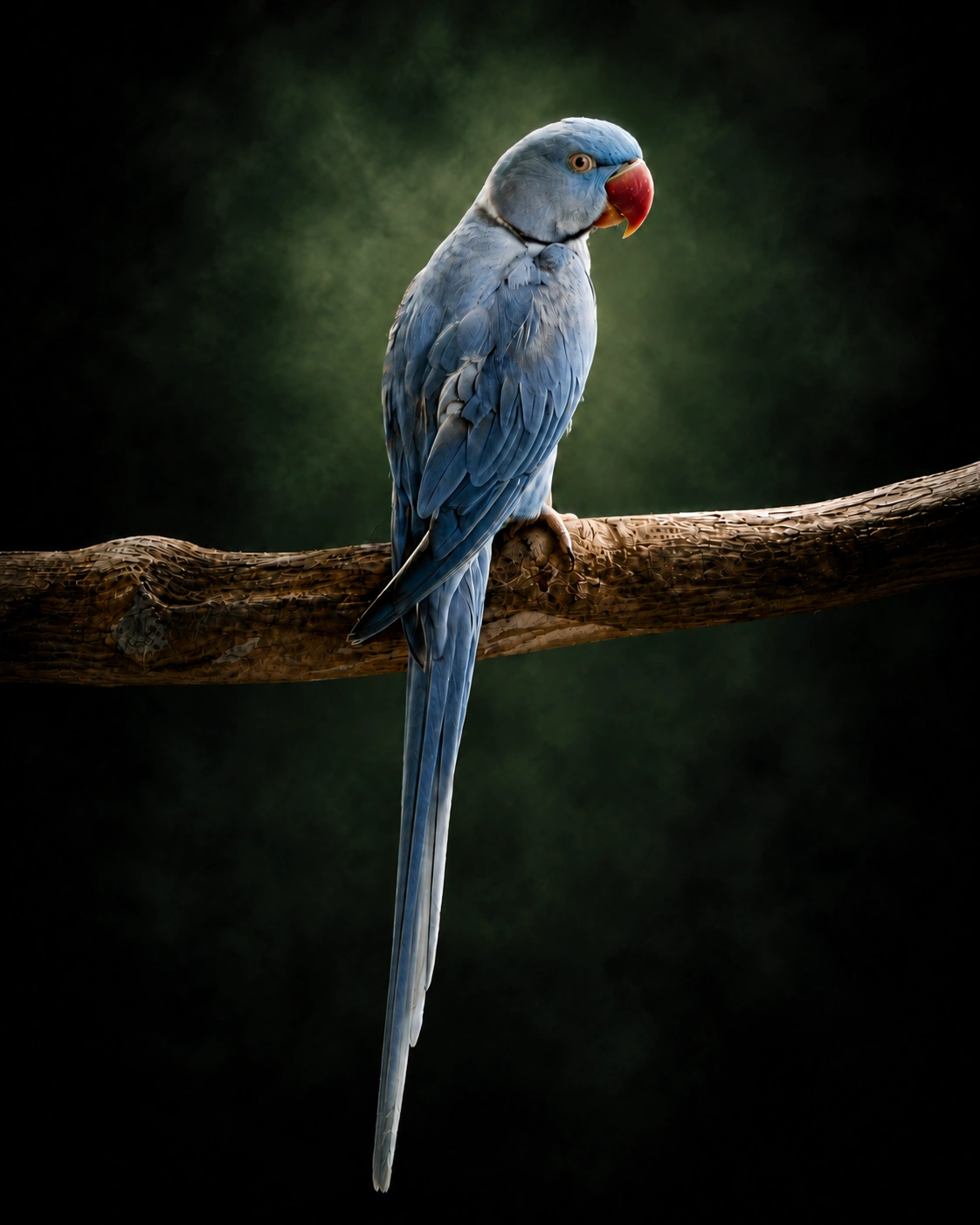
Adult males develop a complete black neck ring and a rose-pink nape band, typically finishing their full adult markings between 2.5–3 years. Adult females lack the ring entirely. Juveniles and birds under 3 years cannot be reliably sexed by appearance alone — a lack of ring does not confirm female sex in young birds. DNA sexing via feather sample is the only confirmed method for young or uncertain birds. The book covers sexing and aging in full.
What size aviary does an Alexandrine need?
A breeding pair requires a minimum flight of 2.4 m × 1.2 m × 1.2 m (length × width × height). Larger is always better. Alexandrines need enough length to fully stretch their wings and enough height to hang their long tail without bending. Undersized housing suppresses natural behavior and reduces breeding performance. The book covers housing in full.
What is the rarest Alexandrine mutation?
Mutations such as Albino and Cremino are among the rarest in established captive populations, particularly when combined with correct structure and documented bloodlines. Rarity alone does not define value — a common mutation from a traceable, structurally correct line is often more valuable to a serious breeding program than a rare mutation from an unknown or undocumented background.
Are Alexandrines suitable for beginner bird keepers?
Alexandrines are not ideal for beginners. They are intelligent, confident birds with specific housing, diet, and management requirements. They live 25–30 years, require correct pair management for breeding, are sensitive to routine and disturbance, and need proper avian veterinary care. A new keeper should invest seriously in species knowledge before acquiring birds — the AKQ Alexandrine Guide is written as a starting point for that process.
Stay Connected
Follow program updates, reach out directly, or register interest before making contact.
Stay Updated
Follow @AKQ_Birds for breeding updates, featured lines, and program announcements.
Direct Contact
For serious enquiries, line discussions, or approved breeder contact — message AKQ directly on WhatsApp.